
What is this all about this fluoride (F₂), fluorine (F⁻), hydrofluoric acid (HF), hydrogen fluoride (HF), hexafluorosilicic acid (H₂SiF₆), silicon tetrafluoride (SiF₄), Silicic acid (H₄SiO₄)?
It is super confusing. I don’t get it.
I understand, in that case read the following.
Fluorine (F₂): basically a very toxic gas
- What it is: A chemical element and diatomic gas
- Chemical form: F₂ (two fluorine atoms bonded together)
- Properties: Extremely reactive, toxic gas that’s pale yellow-green
- Reactivity: The most electronegative and reactive of all elements
- Natural occurrence: Very rare in its elemental form because it’s so reactive
- Safety: Highly dangerous – can cause severe burns and is toxic to inhale
Fluoride (F⁻):
- What it is: The ionic form of fluorine (fluorine atom with an extra electron)
- Chemical form: F⁻ (single fluorine atom with a negative charge)
- Properties: Much more stable than elemental fluorine
- Reactivity: Relatively stable when bonded with other elements
- Common compounds: Sodium fluoride (NaF), calcium fluoride (CaF₂), hydrogen fluoride (HF)
- Occurrence: Common in minerals, toothpaste and water treatment
- by the way a Fluoride atom is part of one of the deadliest chemical weapons ever Sarin gas.
Key Differences:
- Stability: Fluorine gas is extremely unstable and reactive; fluoride ions are stable
- Toxicity: Elemental fluorine is highly toxic; fluoride compounds have varying toxicity levels
- Usage: We never use elemental fluorine in water treatment – only fluoride compounds
- Natural form: In nature, fluorine almost always exists as fluoride compounds, not as elemental fluorine
In the context of water fluoridation: All the compounds (H₂SiF₆, HF, etc.) contain fluoride ions, not elemental fluorine. The “fluoridation” process adds fluoride compounds to water, never elemental fluorine gas.
What is the difference between hydrofluoric acid and hydrogen fluoride?
The short answer: Hydrofluoric acid (HF) and hydrogen fluoride (HF) are essentially the same chemical compound (HF), but the names refer to different states or contexts.
Hydrogen Fluoride (HF):
- Pure compound: The chemical compound itself, formula HF
- Can exist as: Gas, liquid, or dissolved in water (basically a poison in two states)
- When gaseous: Called “hydrogen fluoride gas” or “anhydrous hydrogen fluoride”
- Industrial form: Often refers to the pure, anhydrous (water-free) form
- For example: when you take a bath your skin absorbs HF from fluoridated water and at the same time you inhale HF from the steam (from a bath or a shower)
Hydrofluoric Acid (HF):
- Aqueous solution: Specifically refers to HF dissolved in water
- Context: The “acid” name emphasizes its behavior as an acid in solution
- Common usage: What you’d typically encounter in laboratory or industrial applications
- Concentration varies: Can be diluted or concentrated aqueous solutions
Key Points:
- Same chemical formula: Both are HF
- Same molecular structure: One hydrogen atom bonded to one fluorine atom
- Same toxicity concerns: Both forms are extremely dangerous
- Naming convention: “Hydrogen fluoride” emphasizes the compound itself; “hydrofluoric acid” emphasizes its acidic behavior in water
In the context of water fluoridation: When we discuss HF being prohibited under UK law or potentially forming from hexafluorosilicic acid, we’re talking about the same chemical entity (HF) regardless of whether it’s called “hydrogen fluoride” or “hydrofluoric acid.”
The legal prohibitions would apply to HF in any form – whether as the gas, pure liquid, or in aqueous solution.
Now what is the difference between Hexafluorosilicic acid (H₂SiF₆) and Hydrofluoric acid (HF)?
So let’s get into the meat of the whole legal shenanigans.
A legal conflict exists:
1. Hexafluorosilicic acid (H₂SiF₆) is permitted for water fluoridation according to the Water Industry Act 1991 Provision 87C https://www.legislation.gov.uk/ukpga/1991/56/section/87C
while
2. Hydrofluoric acid (HF) is considered a reportable poison according to Schedule 21 of the Deregulation Act 2015 https://www.legislation.gov.uk/ukpga/2015/20/schedule/21
You may ask why is that this toxic poison HF is mentioned in some Deregulation Act?
It looks like it was in someone’s interest to obscure it so it is not in plain sight.
It use to be part of the Poisons Act 1972.
The trouble is Hexafluorosilicic acid (H₂SiF₆) already contains Hydrofluoric acid (HF) in free form but this is not the end of the story so fasten your seat belts.
The BSEN 12175 document lists HF as being a contaminant in H₂SiF₆.
Max. 1.5% of the 6.3 mg of H₂SiF₆ is HF. If 1mg of fluoride is the target of the rogue water companies, there being no background fluoride in the treated water, then the max HF that can be added is 0.0945 mg/litre. 6.3mg because H₂SiF₆ is a 20% solution of fluoride = 5mg H₂SiF₆ + 1.3 mg because of the composition of the rest of the acid.
Calculation breakdown:
- Target fluoride dose: 1 mg/L
- Required H₂SiF₆: 6.3 mg/L (to achieve 1 mg/L fluoride)
- Maximum HF contamination allowed in H₂SiF₆: 1.5% according to BSEN 12175
- Resulting HF in water: 1.5% × 6.3 mg/L = 0.0945 mg/L HF
This creates a regulatory problem because:
- HF is prohibited under the Deregulation Act 2015, Schedule 21 as a reportable poison
- H₂SiF₆ is approved for water fluoridation under Section 87 of the Water Industry Act 1991
- But the approved compound contains up to 0.0945 mg/L of the prohibited substance
How it all works?
Once STW pours the Hexafluorosilicic acid (H₂SiF₆) into the water you are about to drink or about to bathe in the acid undergoes hydrolysis reaction with water (H₂O) and breaks into silicon tetrafluoride (SiF₄), Silicic acid (H₄SiO₄) and a lot more Hydrofluoric acid (HF).
The complete hydrolysis sequence:
- First step: H₂SiF₆ + H₂O → SiF₄ + 2HF
- Second step: then silicon tetrafluoride (SiF₄) reacts with more water and it undergoes further hydrolysis: SiF₄ + 4H₂O → Si(OH)₄ + 4HF or more simply: SiF₄ + 4H₂O → H₄SiO₄ + 4HF
The outcome is:
- Silicic acid (H₄SiO₄ or Si(OH)₄) – a weak acid containing silicon
- More hydrofluoric acid (HF) – additional HF beyond what was formed in the first step
Total reaction: If you combine both steps, the complete hydrolysis of hexafluorosilicic acid in water can be represented as: H₂SiF₆ + 4H₂O → H₄SiO₄ + 6HF
The significance: This means that when hexafluorosilicic acid fully hydrolyzes in water, it can theoretically produce up to 6 molecules of hydrofluoric acid per molecule of the original compound. This complete conversion would represent the maximum possible HF formation on a molecular level.
The BSEN 12175 dosing (6.3 mg/L of 20% solution = 1.26 mg/L pure H₂SiF₆) is designed to deliver 1 mg/L fluoride AFTER complete hydrolysis and dissociation.
What actually happens:
- 1.26 mg/L pure H₂SiF₆ is added to water
- Complete hydrolysis occurs: H₂SiF₆ + 4H₂O → Si(OH)₄ + 6HF
- This produces: 1.26 mg/L × 0.833 = 1.049 mg/L HF from hydrolysis
- Plus contamination: 0.0945 mg/L HF (from the 1.5% contamination in the original compound)
- Total HF produced: 1.049 + 0.0945 = 1.1435 mg/L HF
- This HF then dissociates (99.98% at pH 7) to give the intended 1 mg/L fluoride
It is a correct assumption:
- The 1.1435 mg/L HF represents the total amount produced from 1.26 mg/L of H₂SiF₆
- This includes both contamination and hydrolysis
- This HF then dissociates to produce the target 1 mg/L fluoride
The key point remains: to get 1 mg/L of fluoride, the process produces 1.1435 mg/L of a prohibited substance (HF) as an intermediate step, even though most of it quickly dissociates.
HF is a serious poison (so is highly reactive) but “luckily for us” (“wonderful on tap” – this must be that wonder STW talks about) when HF is in contact with water most of it immediately breaks into fluoride (F⁻) and hydronium ions (H₃O⁺).
The problem is depending on the acidity of the target water the breakdown of HF is greater or smaller
At pH 6:
- % dissociated = 100 / (1 + 10^(3.18 – 6))
- % dissociated = 100 / (1 + 10^(-2.82))
- % dissociated = 100 / (1 + 0.0151)
- % dissociated = 98.5%
At pH 6.5:
- % dissociated = 100 / (1 + 10^(3.18 – 6.5))
- % dissociated = 100 / (1 + 10^(-3.32))
- % dissociated = 100 / (1 + 0.00478)
- % dissociated = 99.5%
At pH 7:
- % dissociated = 100 / (1 + 10^(3.18 – 7))
- % dissociated = 100 / (1 + 10^(-3.82))
- % dissociated = 100 / (1 + 0.000151)
- % dissociated = 99.98%
At pH 8:
- % dissociated = 100 / (1 + 10^(3.18 – 8))
- % dissociated = 100 / (1 + 10^(-4.82))
- % dissociated = 100 / (1 + 0.0000151)
- % dissociated = 99.998%
Comparison:
- pH 6: 98.5% dissociated → 1.5% as HF (0.017 mg/L)
- pH 6.5: 99.5% dissociated → 0.5% as HF (0.006 mg/L)
- pH 7: 99.98% dissociated → 0.02% as HF (0.0002 mg/L)
- pH 8: 99.998% dissociated → 0.002% as HF (0.00002 mg/L)
From our 1.1435 mg/L total HF:
- Remaining as molecular HF: ~0.001-0.02% = ~0.0001-0.0002 mg/L
- Converted to F⁻ ions: ~99.98-99.998% = ~1.143 mg/L
We remind you that STW pours an acid into the water. How do you think? Is this making “the drinking water” more or less acidic?
This changes the regulatory argument: While most HF converts to fluoride ions, there are still trace amounts of molecular HF present, and the process itself involves producing over 1 mg/L of a prohibited substance, even if it quickly dissociates. The legal question remains whether the production and temporary presence of HF violates the poison control regulations.
If you still don’t believe the above calculations think about the 3 forms in this water lifecycle:
1. hexafluorosilicic H₂SiF₆ – it is a highly toxic industrial waste
2. hydrofluoric acid HF – is a reportable poison
3. fluoride – it is allegedly safe and effective, good for your health, bones, teeth and brain
Both source chemical substances and the original element itself – the fluorine are highly toxic
so how come the fluoride unpacked from those poisons is good for you all of a sudden?
It is exactly the fluoride that makes these substances poisonous not the other elements.
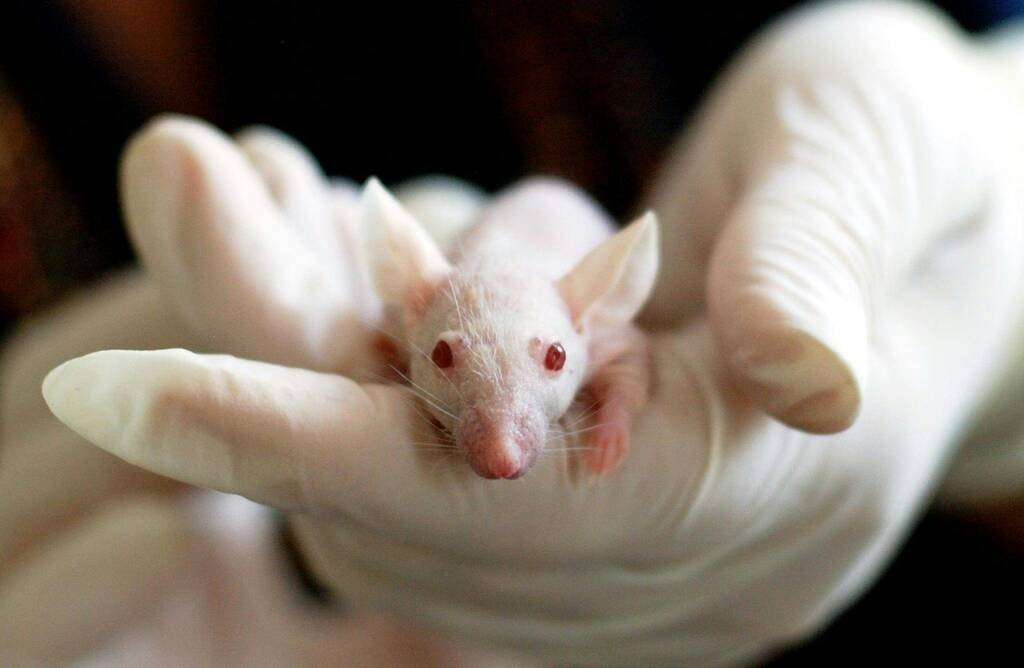
Believe it or not but toxic and lethal doses of fluoride considered valid to this very day were established 80 years ago and are based on the experiments on rats and mice!
The prediction of human toxicities from animal toxicity tests is often poor, and is now discouraged and in some cases banned.
These figures claim that your body can take up to 70-140mg MILLIGRAM of fluoride per KILOGRAM of body mass because the rats could survive that level of poisoning. Has anyone in that lab asked those rats how did they feel?
At the same time it is prohibited to be more than 0.0945 mg (MILLIGRAM) of hydrofluoric acid per LITRE of drinking water! This 94.5µg (MICROGRAM) limit per 1L of water is arbitrary level anyway as HF in any amount is toxic to the body but this comes as part of the fluoridation of water!
They claim 5g of one poison (Fluoride) is fine but at the same time 0.0000945g of a related poison (HF) is considered a highly toxic poison.


Are you now convinced to call or write to the Secretary of State and to your local representative?
Otherwise we assume that you happy of the facts that these two corrosive poisons H₂SiF₆ and HF in contact with water “luckily” break into “harmless” Fluoride so then you can drink the water and take all the benefits of it.
If so then I wish you good luck!
Daily “Non-Toxic” fluoride dose claim
From toxicity claims for a 70kg adult:
- Conservative estimate: 70 mg/kg × 70kg = 4.9 grams per day
- Higher estimate: 140 mg/kg × 70kg = 9.8 grams per day
Daily HF Exposure from Water Fluoridation:
From our calculations (2-3L daily water consumption):
1. HF from contamination (1.5% in H₂SiF₆):
- 2L: 2 × 0.0945 mg = 0.189 mg
- 3L: 3 × 0.0945 mg = 0.284 mg
2. HF from Complete Hydrolysis:
- 2L: 2 × 1.049 mg = 2.098 mg
- 3L: 3 × 1.049 mg = 3.147 mg
Remember most of the poison breaks down into “beneficial” Fluoride but all depends on pH of your water.
If the water is more acidic then there will be more HF floating around.
I let you come up with your own estimates while you gulp that wonderful tap water.
3. Total HF Produced Daily:
- 2L consumption: 0.189 + 2.098 = 2.287 mg = 0.002287 grams
- 3L consumption: 0.284 + 3.147 = 3.431 mg = 0.003431 grams
4. HF Remaining as Molecular HF (0.02% at pH 7):
- 2L: 0.002287 × 0.0002 = 0.0000005 grams
- 3L: 0.003431 × 0.0002 = 0.0000007 grams
The direct comparison:
Magnitude Difference:
- “Safe” daily fluoride: 4.9 – 9.8 grams
- Total daily HF produced: 0.002287 – 0.003431 grams
- Actual molecular HF exposure: 0.0000005 – 0.0000007 grams
Ratios:
Total HF produced vs “safe” fluoride:
- 4.9g ÷ 0.002287g = 2,142 times difference
- 9.8g ÷ 0.003431g = 2,856 times difference
Molecular HF vs “safe” fluoride:
- 4.9g ÷ 0.0000005g = 9.8 million times difference
- 9.8g ÷ 0.0000007g = 14 million times difference
The Regulatory Absurdity:
The regulatory system simultaneously claims:
- 9.8 grams of fluoride daily is perfectly safe (*thanks to the poker face lab rats)
- 0.000001 grams of HF daily requires reportable poison status.
Yet both deliver the same toxic fluoride ions into the human body.
This 9.8 million-fold difference in “acceptable” exposure cannot be scientifically justified when the ultimate toxic mechanism is identical.
* it is very clever to use mute animals to come up with the accurate dosage for humans, isn’t it?
It could not be further from the truth.